
Qardus Guides

Expert guides for ethical finance and investing.

If you’re deploying £25,000 or more, access is no longer the problem; the UK market gives you plenty of ways to invest. The constraint is knowing where your capital actually belongs, and whether the structure behind each option holds up under Shariah scrutiny.

In the UK, you have access to tax wrappers like ISAs and pensions, along with a growing range of Islamic investment options. That does sound helpful on paper, but it does not remove the need to think carefully about structure. Two investors can use the same wrapper and still end up with very different outcomes depending on what they actually hold and how their capital is deployed.

At this level, investing becomes a question of placement and structure. Where your capital is deployed, how it behaves, and how each layer fits together financially and from a Shariah perspective is what determines whether the portfolio works as intended.

What Does Halal Investing Actually Mean?

Halal investing, in practical terms, means deploying capital in a way that aligns with Shariah principles across how money is earned, how risk is taken, and what you are actually exposed to.

It is not just about avoiding interest. It is about structure, ownership, cash flow, and the nature of the underlying activity. You are participating in an asset, a business, or a financing structure where returns are tied to real economic activity and shared risk.

Most complexity tends to cluster at this stage of the process. A product can appear acceptable on the surface and still raise issues once you look at how returns are generated, how leverage is used, or what portion of income comes from non-permissible sources. The label alone does not carry much weight without understanding the underlying mechanics.

In the UK context, this is even more important because many mainstream investment vehicles were not designed with Shariah compliance in mind. As a result, halal investing becomes less about finding a single “approved” option and more about assessing how each investment is built, what it gives you exposure to, and whether that exposure holds up when you look a layer deeper.

The Core Shariah Principles You Need to Know

At this level, you only need clarity on the factors that affect how your capital is deployed.

Riba (Interest)
Any guaranteed return on money purely for the use of money falls under riba. This is why conventional savings accounts, bonds, and most fixed-income instruments are excluded. The issue is not just the presence of interest, but the fact that return is detached from real economic activity or shared risk.

Haram Sectors
Certain industries are off-limits regardless of how profitable they are. This includes alcohol, gambling, adult entertainment, and conventional financial services built around interest. Equity screening often triggers these exclusions, where even robust companies fail to qualify because of a fraction of their income streams.

Gharar, Maysir, and Risk
Excessive uncertainty and speculation are not permissible. This is where derivatives, options, and many leveraged instruments come into focus. For investors deploying larger amounts of capital, this is crucial because these tools are often used for hedging or return enhancement in conventional portfolios, but they introduce structures that do not align cleanly with Shariah principles.

Halal vs Haram: Which Asset Classes Can You Invest In?

Not all asset classes are treated the same under Shariah. What matters is how returns are generated, what is present underneath the investment, and the way risk is shared.

Here’s how the main asset classes typically map:

Asset Class Halal? Notes
Equities Conditional Permissible if the company passes Shariah screening. This includes sector-based exclusions and financial thresholds around debt and non-compliant income.
Sukuk Generally yes Structured to represent ownership in an underlying asset or project. Returns are linked to asset performance rather than interest payments. Structure still matters.
Property Generally yes Direct ownership is permissible. Financing structure is key if leverage is involved. Rental income is typically acceptable if the use of the property is compliant.
Cash Accounts Conditional Non-interest current accounts are permissible. Islamic savings accounts may offer expected profit rather than guaranteed interest, depending on structure.
Derivatives Generally no Options, futures, and similar instruments involve elements of speculation and uncertainty that do not align with Shariah principles.


Effective Shariah-compliant allocation requires a deep dive into the underlying architecture of an asset rather than relying on a binary "allowed" or "not allowed" classification. Two investments in the same category can be treated very differently once you look at how returns are generated and what your capital is exposed to.

Are Popular Index Funds Halal?

Popular index funds like the S&P 500 or Nasdaq are not automatically halal. In their standard form, they include companies that generate income from interest, operate in non-permissible sectors, or carry levels of debt that fall outside Shariah thresholds.

This is where the issue tends to get missed; the index itself is not screened. It is designed to represent the market, and not to filter it. So even if a large portion of the companies may appear acceptable at a glance, the overall exposure does not meet Shariah requirements once you examine the underlying composition.

There are, however, screened alternatives. These are indices and funds that apply Shariah filters to remove non-compliant companies and apply financial ratio thresholds. You’ll find versions of global equity indices that follow this approach, along with ETFs and managed portfolios built around them.

The tradeoff is in diversification. A screened index will typically have fewer companies and less exposure to certain sectors, particularly financials. That can change how the portfolio behaves compared to a conventional index, especially over shorter periods.

For most investors, the decision is about deciding how much deviation from the conventional market you are comfortable with in order to maintain compliance.

How to Screen Individual Stocks for Shariah Compliance

Once you move beyond funds and into individual stocks, the question becomes simpler in one sense and more nuanced in another. The focus moves toward evaluating individual company fundamentals to determine their suitability for a Shariah-compliant portfolio.

At a high level, you are looking at two things. What the company does, and how it is financed. A business can operate in a permissible space and still fall short because of how much of its income or balance sheet is tied to non-compliant elements.

Most investors use a set of widely accepted thresholds to make that call.

The Three Thresholds

Shariah Screening Benchmarks (Commonly Used)

  • <5% non-permissible income
    A small portion of revenue can come from non-compliant sources, but it must remain limited and typically requires purification.

  • <33% debt (to market cap or assets)
    The company should not be heavily reliant on interest-based financing.

  • <33% cash / receivables
    This helps ensure the business is tied to real economic activity rather than primarily financial assets.

These benchmarks provide a functional middle ground, respecting how businesses scale today while maintaining a hard line on Shariah integrity.

What begins as a series of checks eventually becomes a fundamental way of seeing and interpreting asset structures. You start to see how businesses generate income and where potential issues might emerge before you even look at the numbers.

A Note on Purification and Zakat

Even with screening, some level of non-compliant income can still pass through a portfolio. This is typically small and within accepted thresholds, but it does require purification. Identifying the non-compliant portion and donating it ensures that no prohibited earnings are retained as part of the investment return.

As portfolios grow, Zakat also becomes more relevant. Listed equities, cash balances, and certain fund holdings may all fall within scope depending on how they are structured. The calculation can vary based on asset type and intent, so it’s worth reviewing this periodically to ensure it reflects your actual exposure.

Halal Investing for High Net Worth Individuals and Businesses

The conversation changes once you’re deploying larger amounts of capital. Managing wealth at this scale requires a transition toward optimizing how different accounts and tax structures interact as a unified system.

At this level, small inefficiencies compound, but so does poor structuring. The goal is to ensure that capital is placed in a way that remains compliant, tax-aware, and operationally clean over time.

Tax Efficiency and Wealth Structuring

In the UK, wrappers like ISAs and SIPPs can play a useful role, but they don’t determine whether an investment is halal. They simply change how returns are treated from a tax perspective. The true value resides in the underlying assets held within them. 

An ISA can be used to hold screened equities or Islamic funds, allowing gains and income to grow tax-free. A SIPP can offer long-term compounding with tax relief, but again, the underlying investments must be compliant. For larger portfolios, this becomes a question of placement across accounts rather than selecting a single product.

There’s also a longer-term consideration around inheritance and transfer. Structuring investments in a way that is clear, accessible, and aligned with Islamic inheritance principles becomes part of the picture as capital grows.

Disclaimer: Tax rules and eligibility can change, and their application depends on individual circumstances. This is not tax or financial advice. It’s worth speaking to a qualified advisor before making decisions at this level.

Halal Options for Business Cash Reserves

For businesses, the question often starts with idle cash. Holding large balances in conventional accounts introduces immediate compliance issues, but leaving capital unused carries its own cost.

Shariah-compliant business accounts and deposit structures offer a way to hold liquidity without earning interest, and in some cases, to generate expected profit through permissible financing structures. There are also Islamic funds that can be used for short- to medium-term allocation, depending on liquidity needs.

The key here is to treat business cash with the same discipline as personal capital. It needs a place to exist, a role to play, and a structure that holds up under scrutiny.

UK Halal Investment Options: What’s Available Right Now

The UK market has matured enough that you’re no longer limited to a single type of product. You can now allocate across platforms, banks, and funds depending on how much capital you’re deploying and how liquid you need it to be.

What matters now is how each option behaves in practice. Minimums, access, and liquidity vary quite a bit, especially once you move beyond entry-level platforms.

Here’s a structured view of what’s currently accessible:

Provider Asset Class Min Investment Indicative Return Liquidity
BLME Property / wealth products ~£10,000+ Deal-based / expected profit Low–Medium
Gatehouse Bank Property finance (deposit-style) ~£5,000–£10,000 Expected profit rate (fixed term) Low
Al Rayan Bank Islamic savings accounts ~£1,000–£5,000 Expected profit rate Medium
Sukuk Funds Sukuk (fixed income alternative) ~£500–£1,000 Market-linked income High
Wahed Invest Managed portfolios (equities + sukuk) ~£100–£500 Market-linked returns High


You’ll notice the spread. At the higher end, you’re looking at structured property or bank-based products with fixed terms and clearer income expectations. As you move down, you get more flexibility and liquidity, but returns become market-driven and less predictable.

There isn’t a single “best” option here. The role each plays depends on what you’re trying to do with that portion of capital. Some of it needs stability. Some of it requires growth. The structure comes from how you combine them.

How to Build a Halal Investment Portfolio

If you’re deploying £50,000, the goal is to spread capital across roles so that the portfolio can hold up over time.

A simple structure might look like this:

  • £20,000 in screened equities
    This is your growth engine. You’re taking exposure to businesses that can compound over time, with the understanding that returns will fluctuate.

  • £15,000 in sukuk or sukuk-based funds
    This adds stability and income. It won’t behave like equities, and that difference is useful when markets move.

  • £10,000 in property or property-linked investments
    This gives you exposure to real assets and rental-based income, either directly or through a structured product.

  • £5,000 in cash or Islamic savings
    This is your liquidity buffer. It gives you flexibility without forcing you to sell other assets at the wrong time.

The exact split can change, but the idea holds. Each part of the portfolio has a role. Growth, income, stability, and liquidity are all covered, and capital is not overly concentrated in a single type of exposure.

How Risky Is Halal Investing?

Halal investing operates within a smaller investable universe, and that has real implications once you’re deploying larger amounts of capital. You are working with fewer companies, limited exposure to certain sectors, and a narrower set of instruments compared to a conventional portfolio.

This can introduce concentration risk. For example, the absence of conventional financials and certain highly leveraged businesses means your equity exposure may lean more heavily toward specific sectors like technology or healthcare. That can change how your portfolio behaves relative to the broader market.

There are also trade-offs in flexibility. Tools commonly used in conventional portfolios to manage risk or enhance returns, such as derivatives or structured products, are either limited or not available in a compliant format.

None of this makes halal investing inherently riskier. However, it does change where the risks are, and how they need to be managed - especially when larger amounts of capital are involved.

Frequently Asked Questions (FAQs)

What investments are halal?

Investments are generally considered halal when they avoid interest-based income, stay clear of non-permissible sectors, and are structured around real economic activity. This includes screened equities, sukuk, property, and certain Islamic financial products.

How do I invest my money in a halal way?

You start by choosing compliant asset classes, then apply screening where needed, and finally structure your capital across appropriate accounts or platforms. The focus is on how your money is allocated and how returns are generated.

Is the S&P 500 halal?

In its standard form, no. It includes companies that do not meet Shariah criteria. There are screened alternatives that apply compliance filters to create a permissible subset of the market.

Which UK bank is best for Muslims?

Banks like Al Rayan and Gatehouse offer Shariah-compliant products. The better choice depends on what you need, whether that’s liquidity, expected profit, or access to specific types of accounts.

Is Apple or Tesla halal?

It depends on screening. You would look at sector exposure, income sources, and financial ratios such as debt and non-permissible income. The answer can change over time as company financials evolve.

Can a business invest in halal products?

Yes. Businesses can place surplus cash into Shariah-compliant accounts, funds, or financing structures. The same principles apply, but with more focus on liquidity and operational flexibility.

Are ISAs and SIPPs halal?

They can be used in a halal way, but they are not inherently halal. The wrapper is tax-related. Compliance depends entirely on the investments held within them.

How risky is halal investing at scale?

Risk shifts rather than disappears. A smaller investment universe and limited instruments can lead to concentration, so larger portfolios require more deliberate allocation and ongoing oversight.

Conclusion

Once you reach this level of capital, investing becomes a question of structure rather than access. The UK market gives you enough options to build a compliant portfolio, but it does not make the decisions for you.

Clarity on where your money sits, how each component behaves, and how everything fits together is what turns capital into something that can compound without friction. Without that, even well-intentioned investments can drift out of alignment over time.

If you’re working with meaningful capital, it’s worth taking the time to map this properly. That can mean reviewing your current setup, speaking to a qualified advisor, or exploring platforms and products that fit the role each part of your capital is meant to play.


UK Muslims need inheritance tax planning that protects heirs, supports Islamic inheritance, and keeps the estate legally sound under UK law. 

This planning is becoming increasingly important for a large number of families. Property values, business assets, pensions, investments, and savings can push an estate above the inheritance tax threshold, especially while the nil-rate band remains frozen. 

At the same time, Muslim families need to account for Islamic inheritance rules, the rights of heirs, charitable giving, and the risk of disputes when the will, records, and estate instructions are not properly arranged. 

This guide explains the key areas to consider, including UK inheritance tax, Islamic wills, lifetime gifting, charity, waqf, moving abroad, and halal investment diversification.

This article is for general information only and is not legal, tax, financial, or religious advice.

Why UK Muslims Need To Plan For Inheritance Tax Early 

Many Muslim families in the UK are asset-rich, but that does not always mean they have cash available when it is needed. Wealth is often tied up in a family home, buy-to-let properties, a family business, pensions, savings, overseas assets, or investment portfolios.

This can leave heirs trying to handle tax, paperwork, property decisions, and family expectations all at once. If the will, tax position, gift records, and asset ownership are not properly arranged, heirs may face a large inheritance tax bill, delays in dealing with the estate, or the difficult decision of selling property or business assets quickly. 

There may also be disagreements between family members, especially if the estate is not distributed in a way that reflects Islamic inheritance principles. 

In cities such as Manchester, Muslim professionals, landlords, doctors, dentists, SME owners, and families with rising property wealth may already have estates that are harder to divide, value, and pass on smoothly.

The Main UK Inheritance Tax Rules 

Inheritance tax is a tax on the estate of someone who has died. An estate can include property, savings, investments, personal possessions, business assets, and some lifetime gifts made before death.

In the UK, the standard inheritance tax threshold is called the nil-rate band, and it is currently £325,000. In simple terms, this means inheritance tax is usually charged only on the part of the estate above the available threshold. The standard inheritance tax rate is 40%.

There are, however, important exceptions. Inheritance tax is not normally due if the estate is worth less than the available threshold. It is also not normally due when anything above the threshold is left to a spouse, civil partner, charity, or community amateur sports club.

There may also be extra allowance available when a home is passed to children or grandchildren. In that case, the effective threshold can rise to £500,000. Married couples and civil partners may also be able to transfer unused allowance to each other, which can increase the total allowance available when the second person dies.

For example, if someone leaves an estate worth £800,000 and only has the £325,000 nil-rate band available, £475,000 may be exposed to inheritance tax. At 40%, that could mean a tax bill of £190,000.

The Islamic View Of Inheritance And Wealth Transfer

In Islam, inheritance is not simply a personal choice. A person cannot decide to divide their estate only according to emotion, convenience, or family pressure. The Qur’an gives fixed shares to certain heirs, and these shares are part of the Islamic framework for justice, responsibility, and family protection.

Debts and obligations need to be dealt with before an estate is distributed. These can include funeral costs, unpaid debts, mahr, zakat, and any valid bequests. Only after these matters are addressed should the remaining estate be distributed to the rightful heirs.

This is why wealth transfer in Islam should be treated as an amanah. The estate has to be handled with care, because it affects debts, heirs, dependants, family relationships, religious obligations, and charitable intentions. Good inheritance planning gives families a better chance of fulfilling those responsibilities properly. 

The exact Islamic shares depend on the family structure at the time of death, so families should not rely on guesswork. A qualified scholar or Shariah adviser should be involved, especially where the estate includes property, business assets, overseas assets, or complex family circumstances.

Why Muslims In The UK Need An Islamic Will

UK Muslims need a will that protects the legal position of the estate while reflecting the Islamic principles that guide how wealth should pass to heirs. 

If someone dies without a valid will, UK intestacy rules decide how their estate is distributed. These rules do not automatically follow Islamic inheritance shares, which can create problems for Muslim families, especially where there are children, surviving parents, business assets, overseas assets, or family members expecting the estate to be divided according to Shariah.

A properly drafted Islamic will gives the family and executors a legal document to follow. It can appoint executors, state funeral wishes, deal with debts and liabilities, account for mahr, zakat, or other obligations where relevant, include valid charitable bequests, and set out how the estate should be distributed according to Islamic inheritance principles. 

The will still needs to meet UK legal requirements. Therefore, it is important to work with a solicitor who understands Islamic wills, a qualified scholar or Shariah adviser, and a tax adviser if the estate is large or complex.

You can learn more in our guide to Islamic wills in the UK

The One-Third Rule, Charity, And Waqf

Charitable giving is an important part of Muslim estate planning. In Islam, a person can generally leave up to one-third of their estate as a bequest, subject to Islamic rules and scholarly guidance. This portion can be used for sadaqah, Islamic education, mosque projects, family support outside the fixed inheritance shares, waqf-style giving, or other long-term charitable causes.

This principle is based on the well-known hadith of Sa’d ibn Abi Waqqas, who asked the Prophet (PBUH) how much of his wealth he could give away as a bequest. The Prophet allowed one-third, but also said that one-third is much. This shows that charitable legacy is encouraged, but it should not come at the expense of the rightful heirs. 

Waqf gives Muslim families a way to turn charitable giving into an ongoing legacy. In simple terms, a waqf is a charitable endowment designed to create lasting benefit. It is often connected to sadaqah jariyah, where the reward continues as long as people benefit from it. 

In the UK, waqf-style planning may need to be structured through registered charities, charitable trusts, or recognised Islamic charitable institutions. This should be done carefully so the arrangement works under both UK law and Islamic guidance.

There can also be an inheritance tax benefit. Charitable gifts are generally exempt from inheritance tax, and leaving at least 10% of the net estate to charity may reduce the IHT rate on some assets from 40% to 36%.

That said, charity should be framed as an act of worship and long-term legacy, with tax planning treated as a supporting benefit. 

Lifetime Gifting And The 7-Year Rule

Lifetime gifting is one of the most practical ways to plan for inheritance tax, but it needs to be done early and properly. The basic idea is that if you give assets away during your lifetime and survive for seven years after making the gift, that gift may fall outside your estate for inheritance tax purposes.

If you pass away within seven years, the gift may still be considered when inheritance tax is calculated. The tax treatment depends on when the gift was made. Gifts made within three years of death can be taxed at 40%. 

After that, taper relief may reduce the rate:

  • 3 to 4 years: 32%
  • 4 to 5 years: 24%
  • 5 to 6 years: 16%
  • 6 to 7 years: 8%
  • 7 years or more: 0%

Smaller allowances can also support regular gifting. The annual exemption usually allows gifts of up to £3,000 each tax year. Other allowances may cover small gifts of up to £250 per person, wedding gifts, and regular gifts made from surplus income, as long as those gifts do not affect your normal standard of living. 

One important warning is the “gift with reservation” rule. For example, if you give your house to your children but continue living in it rent-free, it may still be treated as part of your estate.

From an Islamic perspective, gifting should be done with fairness, clarity, and proper intention. It should not be weaponized to create injustice or quietly cut out rightful heirs.

Trusts, Pensions, Businesses, And Complex Estates

Some Muslim families need more advanced inheritance tax planning because their estate is not limited to a home and savings account. It may include rental properties, family businesses, company shares, overseas assets, investment portfolios, or large pension pots.

In these cases, estate planning has more moving parts. Trusts may be useful in some situations, but they come with their own tax rules, costs, reporting requirements, and Shariah considerations. Business assets may also qualify for inheritance tax relief in some cases, but this should never be assumed without proper advice. 

Pensions also need careful review. The way pension death benefits are treated can depend on the type of pension, the age of the person who dies, the beneficiaries, and the wider tax position of the estate.

Cross-border assets can add another layer of complexity because different countries may have different legal, tax, and inheritance rules.

For larger estates, it is worth getting specialist tax, legal, and Islamic inheritance advice before using trusts, restructuring assets, or making large lifetime transfers.

Does Moving To Dubai Avoid UK Inheritance Tax?

Many high-net-worth Muslims think about relocating to Dubai for tax, lifestyle, business, or family reasons. For some people, that may form part of a wider financial plan. 

Relocating to Dubai might change someone’s wider tax position, but UK inheritance tax can still apply in certain cases. 

UK inheritance tax exposure can remain if the estate still includes UK property, UK investments, rental properties, business interests, or other UK-connected assets. Residence history and long-term tax status can also affect the position. 

This is where families need to be careful - relocation should not be treated as a shortcut or a quick fix. It is a serious cross-border planning decision that can affect tax, inheritance, family succession, and Islamic estate planning.

Moving country may change your lifestyle and future tax position, but it does not automatically remove the inheritance tax issues attached to UK wealth.

Before making a decision, speak to a UK tax adviser, a UAE tax adviser where relevant, a solicitor, and a qualified Islamic inheritance adviser.

How Halal Investment Diversification Fits Into Estate Planning

A strong estate plan looks at tax, but it also considers liquidity, asset ownership, how wealth will be divided, and how easily heirs can manage what they receive. 

Many Muslim families hold most of their wealth in one or two places, such as the main family home, buy-to-let property, a family business, or cash savings, which can lead to problems down the line. 

Property may be difficult to divide between heirs. A business may be hard to value or sell. Cash may lose value over time. If the estate does not have enough liquidity, heirs may have to sell valuable assets at the wrong time just to meet tax or estate obligations. 

This is where diversified halal investments can play a role. They do not automatically reduce inheritance tax, but they may help families spread wealth across different assets, reduce overconcentration, and create more flexible estate planning options while staying aligned with Islamic values.

Halal P2P investing can be part of this wider picture. Through platforms such as Qardus, eligible investors can access Shariah-compliant investment opportunities while supporting UK SMEs.

Capital is at risk. Tax treatment depends on individual circumstances. This is not financial, tax, legal, or religious advice.

Practical Checklist For Muslim Families

A good inheritance tax plan starts with a clear picture of what you own, what you owe, and how your estate should be handled when you pass away. 

Muslim families, in particular, need an estate plan that works under UK law while reflecting Islamic inheritance principles. 

Use this checklist as a starting point:

  • Calculate the total value of your estate.
  • Include your home, savings, investments, pensions, business assets, rental properties, overseas assets, and major personal possessions.
  • Check your available nil-rate band and residence nil-rate band.
  • Review your Islamic will.
  • Make sure your will is valid under UK law.
  • Confirm who your Islamic heirs are.
  • Record debts, mahr, zakat, and any other obligations that need to be settled.
  • Review lifetime gifting options.
  • Keep clear records of gifts.
  • Consider charitable bequests and waqf-style giving.
  • Check whether your estate has enough liquidity to pay inheritance tax.
  • Review whether too much wealth is concentrated in property or one business.
  • Speak to a solicitor, tax adviser, and qualified Islamic scholar.
  • Revisit the plan after marriage, divorce, children, a business sale, property purchase, relocation, or major investment changes.

This does not replace professional advice, but it can help families start the right conversations before the estate becomes difficult to manage.

FAQs: Islamic inheritance & UK tax

Yes. Muslims in the UK are subject to UK inheritance tax rules where those rules apply. Islamic inheritance principles guide how Muslims should distribute wealth, but they do not replace UK tax law. This is why both tax planning and Islamic inheritance planning need to be considered together.
An Islamic will can be valid in the UK if it meets UK legal requirements. It should be drafted carefully so it reflects Islamic inheritance principles while still being legally enforceable. A solicitor familiar with Islamic wills can help with this.
Yes. Lifetime gifting can be part of inheritance tax planning. However, the 7-year rule, gift allowances, proper record-keeping, and Islamic fairness between heirs should all be considered before making large gifts.
Charitable gifts are generally exempt from inheritance tax. In some cases, leaving at least 10% of the net estate to charity may reduce the IHT rate on part of the estate. For Muslims, this can also support sadaqah jariyah or waqf-style giving.
Not automatically. UK assets, residence history, domicile or long-term tax status, and UK property can still matter. Anyone considering relocation should get specialist cross-border tax and legal advice.

Final Word: Plan Your Estate Before Your Family Has To

Inheritance tax planning for Muslims in the UK brings together several important responsibilities, such as UK tax law, Islamic inheritance, family protection, charitable legacy, wealth preservation, and halal investing.

Estate planning is easier to handle before wealth is spread across property, businesses, pensions, investments, and overseas assets. With the right documents, advice, and records in place, families can reduce avoidable tax exposure, protect rightful heirs, avoid disputes, support charitable intentions, and keep wealth aligned with Islamic values. 

It helps your family make the right decisions when they are least prepared to make them.  Instead of leaving heirs to work things out under pressure, proper planning gives them the will, records, and instructions needed to deal with the estate properly.

If you are thinking about how to preserve, diversify, and pass on wealth in a Shariah-conscious way, Qardus can help you explore halal investment opportunities as part of a broader wealth plan.

Meet Our Experts

Insights shaped by specialists in ethical finance, SME growth, and Sharia-compliant investment.
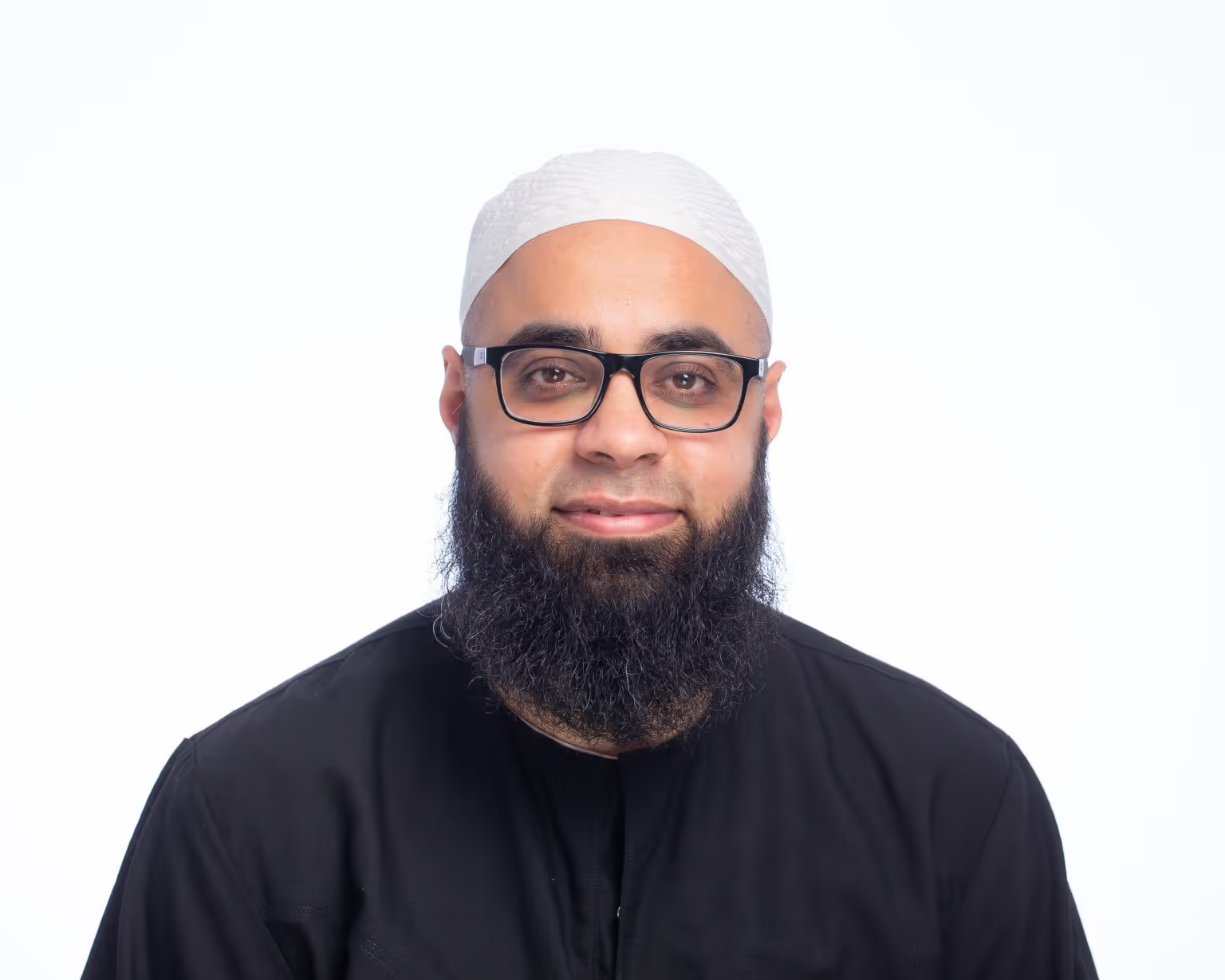
Hassan Daher
CEO
Founder and CEO of Qardus, the UK's first Sharia-compliant SME financing platform. Hassan is a CFA charterholder and holds a PhD in Islamic Finance.
Mufti Faraz Adam
Executive Director and Head of Sharia Advisory
Mufti Faraz Adam is a well known UK-based Islamic Finance & Fintech consultant and heads the global Shariah advisory firm Amanah Advisors.

Invest with clarity. Grow with confidence.

Our approach is built on transparency, long-term thinking and principled finance. Discover how Qardus can support your personal investments or help your business access ethical funding.

Four young professionals, including a woman in a hijab, standing and sitting in a modern office space.