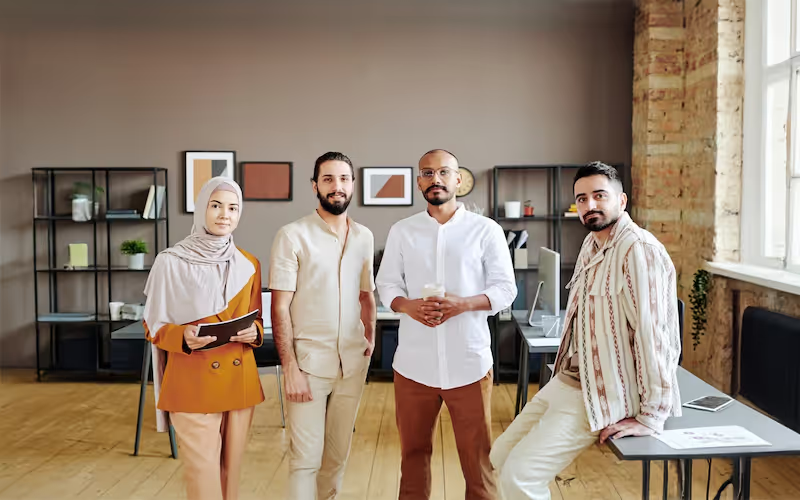
Sharia-compliant venture capital supporting innovation and growth

Introduction
Across the world of finance, business, corporate transactions, and investments, adherence to ethical and religious principles is becoming increasingly important. People are actively searching for Sharia compliant venture capital which stands at the intersection of entrepreneurship and Islamic finance.
Not only does Sharia-compliant venture capital support businesses to operate within the rules of Islamic finance, but also ensures that they have adequate funding to innovate and grow.
Sharia-compliant venture capital facilitates and enables ethical growth and investment. What this means in the long-term for businesses is that they can ensure their growth is sustainable and stable.
WHAT IS VENTURE CAPITAL?
In its very basic form, venture capital is exactly what it says it is. It is capital (money) for a venture. It provides essential funds for (usually) start-ups or small and medium-sized enterprises that have potential for growth and want to minimise their debt. The aim of anyone investing in these businesses is to see a good return on their investment.
Investors or venture capital firms that invest in a business provide capital funding in exchange for ownership or some equity in the business.
For Muslims, venture capital is a move away from obtaining funding from banks which offer loans that do not adhere to Sharia principles. Primarily, conventional banks offer loans based on interest calculations and interest is prohibited in Islam.
In addition to funding, some venture capitalists offer advice and mentoring to the businesses they invest in. This can be a great boost for those looking for management expertise. This can come in the form of strategic guidance, access to networks, and business development opportunities. The aim is to accelerate the trajectory growth of the business.
To summarise, venture capital plays a significant role in supporting innovation. Many new businesses can struggle to secure the finance to enable them to grow as they do not have a trading history or record of achievement. Being able to access venture capital means ideas become innovations, and innovations can become successful.
Sharia Compliant Venture Capital
When it comes to Sharia-compliant venture capital we are referring to venture capital that operates within the parameters of Islamic finance. The principles of Islamic finance are based on ethical and socially responsible transactions, and zero interest-based lending.
Unlike the more traditional form of venture capital funds, Sharia compliant venture capital invests in those promising businesses that operate in Sharia-compliant industries. This means Sharia-compliant venture capital cannot invest in industries such as the porn, alcohol, or gambling industry.
More likely is that venture capital funds will invest in industries such as healthcare, sustainability, renewable energy, and education.
Innovation And Islamic Finance
A critical element of Sharia-compliant venture capital is to support and encourage innovation within the Islamic finance ecosystem. What this means for businesses and entrepreneurs is that they can pursue Islamic and innovative ideas whilst ensuring they can access funding in a Sharia compliant way.
One of the key concepts within Sharia compliant venture capital is the concept of risk sharing (mudarabah). What this means is for investors to provide the capital to entrepreneurs who use the money to grow and develop the business idea.
Any profits that are generated are then shared between the parties in pre-agreed terms and ratios. In a difficult and unpredictable economy, it means businesses can access finance and develop their product and services where otherwise they may not be able to.
Ethical Investments And Venture Capital
When it comes to investments, Sharia rules are strict and require that investments are fully halal. What this means is that venture capital cannot be spent on haram activities or industries.
Instead, venture capital investments must be used for ventures that are ethical and that contribute to society in a positive way. Not only does this ensure compliance with Islam, but also ensures that the capital is spent in a way that aligns with Islamic finance and the beliefs of the investor and business.
Islamic Finance And Entrepreneurship
When it comes to Islamic finance, money serves mainly as a medium of exchange rather than a tradable commodity value. For entrepreneurs with innovative ideas, they need the money to be able to scale and grow their idea into a profitable business.
When looking for Sharia-compliant venture capital businesses need to look out for:
- Mudarabah/ profit sharing: make sure any contract relating to venture capital investment is based on a fair and pre agreed payment ratio (with losses borne by the investor).
- Musharakah: in this type of partnership arrangement the parties share the profits according to the capital contribution.
- Advisors: make sure that you have access to a Sharia advisor who can advise on compliancy and ongoing compliance.
- Investment: any investment should be halal and in halal industries
- Annual disclosure: check and monitor Sharia compliancy and ensure you have annual disclosure for transparency
- Regulation: ensure there is a regulatory framework that is rooted in Islamic finance.
Ventures Supported By Sharia-Compliant Capital
Many businesses have been supported by Sharia compliant venture capital. The remit of businesses includes fintech companies, digital, and health care sectors.
For any new business or SME looking for investment, venture capital is often the perfect solution.
Venture capital plays a critical role in many different ways:
- provides financial resource and financial services
- supports early stage innovation
- facilitates experimentation and entrepreneurship
- provides guidance via the mentorship model
- offers long term perspective
- provides capital solutions
- offers market exposure
- enables SME to navigate new sectors
- focus away from the bank to the investor
- opportunity to scale growth and capital
- ecosystem and infrastructure development
Future Trends
The future of Islamic venture capital funds looks bright. The Islamic finance market is one of the fastest growing financial markets in the world. Accompanied by technological advancement and the increasing demand for Sharia-compliant products and finance, venture capital funds that adhere to Islamic finance rules will continue to grow.
The demand for ethical venture capital is not only driven by Muslims. There are huge swathes of communities who want to invest in a more socially responsible and ethical way. Not only does this generate sustainable growth, but also supports efficiency and economic prosperity for the long term.
Receive insights on ethical financing and Islamic finance directly to your inbox.
Explore more news
In the last few decades, the halal travel industry has seen a huge increase in demand. The intersection of halal travel and the Islamic finance industry has led to a huge market catering to the needs of Muslim travellers looking for travel options that are halal. This synergy between the two industries reflects the growing need for Islamically compliant travel options. Islamic finance is offering the halal travel industry with Sharia compliant finance options in order to widen the scope of halal travel products and services.
Whether you are travelling solo, as a family with children, for a meeting or conference, the demand for halal accommodation and halal travel is growing. As the demand grows so too does the availability of halal products and services on the market.
Halal Travel
It may seem like a growing trend, but the halal travel industry is here to stay. With millions of Muslims spread across the globe, and with higher levels of disposable income earmarked for travel, the halal travel industry is booming.
The halal travel industry includes a huge range of offerings and services. These services are designed to cater to the needs of discernible Muslims who want to ensure they are compliant with the requirements of their faith, but still able to travel and see the world.
It may seem to be a niche market, but the fact that the demand currently outstrips the supply in many countries shows that this trend is likely to grow. The demand is driven by a Muslim population that places value on authentic experiences and Sharia compliancy.
WHY DO WE NEED HALAL TRAVEL OPTIONS?
Halal travel is important for many different reasons. For Muslims who want to travel without breaching Islamic rules, halal travel offers the option of travel that aligns with personal beliefs.
However, the importance of halal travel goes beyond religious and personal preferences. It encompasses cultural, economic and social dimensions.
Halal travel helps to diversify the travel industry and create respectful and inclusive tourism experiences for Muslims. Not only that, but halal travel goes a long way in contributing to the cultural understanding, economic development, and ethical sustainability of areas in the world that are under-exposed and underprivileged.
The more we invest in areas that are suitable for halal travel the more inclusive we make the world. There are many issues facing different countries in the world, so opening them up to travel and Muslims travellers can boost the economy in a way that makes them a stakeholder in the economy and travel market.
Many Muslims want their money to be spent in countries that align with their personal values and goals. For example, Muslims would probably not seek to travel to countries with precarious political positions such as Israel.
There is a lot of information online that you can use to research travel options. More Halal Travel and Trade Fair conferences are popping up to help you make more ethical Sharia compliant decisions.
Family Friendly Holidays
The main aspect of halal holidays is that they should be Sharia compliant. However, halal holidays are also all about having a family friendly holiday. Most halal resorts cater to families and promote family activities.
This creates a welcoming environment for Muslim families looking to enjoy their break. Halal travel encourages diversity when it comes to travel and tourism. Exploring Islamic history and culture is a key part of halal travel and is increasing in popularity as the Muslim population continues to grow globally.
The increased demand for halal travel also contributes to global connectivity. It encourages and fosters relationships between regions, leaders and countries all actively catering to Muslims.
This interconnectedness is important in bringing unity to Muslims and ensuring that their needs are catered to. It is important to mention that halal travel also facilitates sustainable and ethical tourism. For example, Muslims are increasingly conscious of their environmental impact and they are encouraged to prioritise sustainability and ethical living in all aspects of their lives, including travel.
Principles Of Halal Travel
The key components of halal travel include the following:
- Halal package deals: travel agencies who offer halal travel must ensure that the package itself is halal. This starts at examining the way the company operates, so it must avoid any form of interest and ensure that the package is linked to travel that does not contravene any Sharia rules and adhere to the Islamic lifestyle.
- Accommodation: halal hotels are top priority when it comes to halal travel. Hotels and resorts should be able to provide facilities that permit and promote prayer and ablution. In addition, halal hotels offer segregated swimming pools and saunas and fully halal dining options. We would not expect to see any alcohol or pork in halal hotels.
- Itineraries: some halal travel operators go further and offer trips that offer Islamic and spiritual enlightenment.
- Muslim-friendly destination: of course, when looking for a halal holiday you would want to visit somewhere that is either in a Muslim country or is Muslim friendly.
- Islamic travel insurance: takaful, also known as Islamic insurance, is becoming more popular in the halal travel industry sector. It offers customers the option of obtaining insurance coverage that is Sharia compliant.
- Look for destinations that are not based on exploitation or unfair wage labour practices.
- When approaching halal travel companies, look at their leadership, their governance, the service they offer, the kinds of project they are involved in, and their Sharia compliancy.
- Don't be scared to ask questions of any halal travel company such as who do you bank with? What are your principles and morals and how do they align with Islam? Do they trips offer private spaces for women? What is their governance and decision making process and where do they feel success lies? Remember, our due diligence should include information on how the company runs and if it is ethical so feel free to have those conversations with any company marketing halal travel options.
There are already so many halal travel options and available in many a diverse region including Turkey, Indonesia, The Middle East, Malaysia, Egypt, Pakistan, and Bosnia. You will also find many a dedicated internet forum and platform relating to halal travel if you need more knowledge from a like minded community. Countries like Spain and India that have great Islamic history and heritage are also good areas to explore.
As the halal travel market continues to expand, so too does the list of options.
Islamic Finance And Halal Travel
Islamic finance is playing a large role in the growth of the halal travel industry. If the Islamic finance market had not seen such growth in recent years, then the halal travel industry would not have been boosted. Islamic finance provides the halal travel industry with access to Sharia compliant business and finance options.
The components of Islamic finance play a key role in shaping and supporting the halal travel industry through funding. This is done not only by influencing the way financial transactions are dealt with, but also by how to manage the economic landscape to remain Sharia compliant.Providing access to Sharia compliant finance means the Islamic finance industry can support halal travel companies.
Providing critical cash and capital ensures the halal travel industry can continue to grow. Not only is this good for international trade and partnerships, but it means Muslims can travel knowing they are not breaching the terms of their faith. Knowledge is important.
The growth in the market also means that there are opportunities for investors to indulge in socially responsible and ethical investments in the tourism and hospitality sectors. The halal travel industry has encouraged those with entrepreneurship to expand their horizons and widen the offerings currently on the market.
Halal travel continues to go through an evolution where the interplay of human beings wanting Sharia compliant travel converges with the travel industry to create the perfect package for Muslims. The halal travel sector relies on building relationships across the globe, and ensuring each product on the halal travel market is compliant and enjoyable. After all, many of us travel to a different area in order to explore and relax.
Halal travel isn't only about travel. It's about ensuring that there is attention to the holistic needs of travellers. This includes spiritual fulfilment, access to prayer, compliance with rules about segregation, assurance of halal certified products, and having some cultural resonance with the area visited.
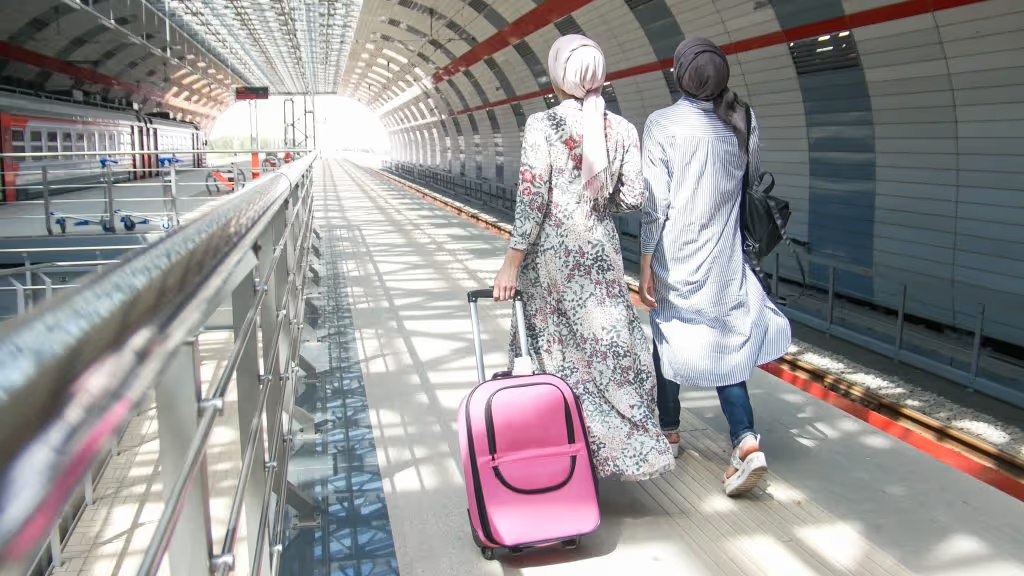
The current cost of living crisis in the United Kingdom is affecting everyone. For many households, this is the highest squeeze on their finances that they have experienced. Many people are being forced to take measures in order to stay afloat. The cost of food, goods, and utilities are continuing to rise at an alarming rate, and people are having to make smart financial decisions.
According to recent statistics, up to 18 million households could face fuel poverty by January 2023 due to the ongoing energy crisis. Many of these families will have to decide between heating and eating. Investment bank Citi estimates that the UK consumer price inflation could reach 18% by early 2023. This will not only affect the finances of couples, and families with children, but almost everyone in the country.
This is why it is vital that you make smart financial decisions that could help you ride out this current cost of living crisis.
Let's have a look at some of the ways in which you can make your money go further.
Plan And Budget
One of the best things you can do is prepare a spending and budgeting plan. This will help you identify if you are overspending and examine those areas where you can cut back and save costs.
For example, do you still need to have a full Sky TV package? Can you get a cheaper broadband deal? Do you have any subscriptions that you no longer need or use?
Go through each direct debit and see if you can reduce or remove it. Check what you are paying for your smartphone packages and see if these can be reduced in any way. Ring your providers and ask them if they have any better deals on offer that could lower your costs.
Track all of your expenses and payments. This is the only way that you can successfully budget. Information and knowledge are power so use them to your advantage. Create a spreadsheet or table that lists all your incomings and outgoings, and then have a close look at where your money is going.
Muslims will already be used to the concept of planning and budgeting as they have to reconcile their finances and accounts every year in order to calculate their zakat calculations.
However, it is a good idea to keep a more regular eye on your finances, and remember that any drop in your income and savings may also affect your zakat and sadaqa payments.
Live Within Your Means
This is really important. It sounds so simple, but many people in the UK live beyond their means and this means they will struggle during the recession.
Having debt is not so much of a problem when times are going well. However, if you fail to make your repayments things could go wrong very quickly.
There is a famous Arabic proverb that states 'cut your coat according to your cloth'. Essentially, this encourages us to live within our means and not overstretch ourselves financially.
Islam does not look favorably on those who spend excessively and keep increasing their debt. We should all be looking at how we make use of our resources and expressing empathy for those less fortunate. Managing our finances well is something everyone needs to do, and needs to learn to do better.
Pay Off Debts
It might sound obvious but it is vital that you pay off any debts that you are able to. There are many online debt advice helplines that offer you recommendations and a guideline to help you reduce your debts.
You should prioritize paying off any debt, especially if it is a debt that accrues interest. Interest is not only strictly prohibited in Islam, but is also detrimental on your finances as the interest rates are likely to continue to increase.
If you can, pay off your debts.
Do Not Accrue New Debt
If you are thinking of taking on a new loan or new debt then think twice. Especially if the debt will be accrued due to a purchase that you do not necessarily need.
The same applies to buying things using your credit card. Now is not the time to be accruing more debt that incurs interest.
Start Saving Now
If you can, start saving now. It is never too late to start saving. Good financial management not only means monitoring your spending habits, it also means looking at your savings strategies.
You may need to undertake an evaluation of all your incomings and outgoings to see if there is anything you have left to save. If you do, even if it is a small amount, it is never too late to start saving.
If you do not have an ISA now is a good time to find information about what savings products are out there. For Muslims, there are some halal savings accounts that do not pay interest.
These halal savings accounts offer the same banking services as conventional savings accounts without interest.
Set Savings Goals
Set savings goals for yourself. This could be as little as saving £10 a month, to saving much more.
If you are saving to buy your first home, then you will likely be impacted by the increase in interest rates.
Look for banks and lenders that offer halal mortgages based on Islamic finance principles. Halal mortgages tend not to be as dependent on standard interest rate fluctuations and offer more stable repayment options.
Invest
Many people are scared of investing during a recession or economic crisis, but there are some good investments out there that can generate revenue and income.
Do your research and have a look at what investment opportunities are out there for you.
Investing in the right funds, stocks and bonds can be inflation busting. If you do your research you could find investments that offer a good rate of return. For Muslim investors, there is a range of halal investment options on the market which tend to be more stable than the conventional stocks and shares.
If you want to minimise the risk when it comes to investing, then try not to be too exposed to a limited number of sectors or assets. Diversifying your portfolio via investment is a good way to spread your money with less risk.
Think About Side Hustles
Side hustles have become popular in recent years when it comes to generating additional monthly income. Some low cost side hustles that have been successful in recent years include the following:
- Amazon selling
- Etsy selling
- Selling digital art and services
- Creating a website
- Freelance graphic designing
- Freelance writing
- Blogging and vlogging
- Social media influencing
- Shopify
- Dropshipping
- Creating online courses and offering advice
- Affiliate marketing and advertising services
- Starting a podcast
- Using comparison and cash back websites
These are just some side hustles that require very little financial outlay at the start.
Undertake Due Diligence Before Making Big Financial Purchases And Decisions
If you are thinking of making a big purchase such as a home or a car then make sure you do all the necessary research. Use comparison websites to find the best prices for things like electrical goods and holidays.
When it comes to home purchases, remember the housing market is likely to undergo some change in the coming months.
It might be better to sit tight to see if there is a fall in house prices. You should also look at different funding options such as halal mortgages. These types of mortgages tend not to have fluctuating rates as they are not interest based loans.
Take Your Time - Don'T Be Hasty
This is important. Now is not the time to make rash decisions or rush into big purchases or commit to long-standing and expensive monthly subscriptions.
Whether it is a smartphone or a new streaming service, take your time in deciding whether you definitely want to commit some of your monthly income to it.
WHAT IF YOU ARE SELF-EMPLOYED?
For the self-employed there are some additional concerns during a recession. For a start, whilst you may already be accustomed to fluctuating monthly income, you may see a drop in overall income as your customers feel the pinch and cut back on their spending.
Rising inflation is likely to affect all businesses, irrespective of size and industry.
Now is a good time to look at your personal finances, and check to see that you can:
- meet your mortgage repayments or rental payments
- meet all your essential direct debit payments for things like utilities
- have enough money to cover food and groceries for at least 3 months
- have some savings to fall back on in case your monthly income drops
- cut back on any non-essential items of expenditure
Some Ways You Can Protect Your Money
The Bank of England recently raised the interest rates. When this happens, it is usually an indication that the Bank of England wants people to start saving more and spending less.
Some ways to future-proof your money and savings include the following:
- Pay off as much of your existing debt as you can
- Make changes to your living standards that would bring your costs down
- Check to see if you can consolidate any of your debts
- If you have investments, check up on them and see how they are performing
- Save for a rainy day - even a few pounds a month will soon add up
- Track your spending by separating your wants from your needs
- Limit spending on gifts
- See if you can fix your mortgage if you are currently on a variable rate, there are some deals to be had out there
WHAT IS ZAKAT?
Zakat is one of the five pillars of Islam. It is an obligatory act of worship and is also a mandatory form of charity for Muslims. It has always been seen as a means by which people can achieve social impact through the redistribution of their wealth. The five pillars of Islam are the absolute fundamentals of Islam and include the following:
- Faith (shahada)
- Prayer
- Zakat
- Fasting
- Hajj
Every Muslim is expected to fulfil these five pillars of Islam which serve as the very fundamental acts of worship prescribed by the Islamic faith.
Paying zakat, sometimes referred to as almsgiving, is an obligation for every Muslim who is able to and serves to bring economic equality, fairness, and to rebalance societal injustice.
The Obligations Of Zakat
Muslims who have the financial means and capability are required to pay zakat. They must donate 2.5% of their wealth (see our zakat calculator to work out how much you need to pay). The 2.5% is calculated on money and assets.
The aim of zakat funds is to ensure that they are used to provide the basic necessities for families and communities in need. These needs can include the provision of food, shelter, clothing, education and healthcare.
One of the most important elements of zakat is that payment of it is seen as a means of purifying your wealth whilst demonstrating empathy and compassion for others. In fact, the word zakat actually means 'cleansing' or 'purifying'.
The whole concept is based on the idea that once an individual donates a percentage of their wealth to charitable causes, they fulfil their moral obligation to serve others and build stronger communities and economies. Zakat is particularly important in times of crisis, as it can be used to alleviate hardship via the distribution of wealth.
Zakat is not the same as sadaqa which is encouraged but not obligatory. Zakat is an annual payment that is worked out in a specific way and spent in a specific way.
The Exemptions From Zakat
There are some important exemptions to be aware of when it comes to zakat.
Firstly, there are exemptions for those people who do not have to pay zakat and these include:
- children
- the mentally ill
- the infirm and elderly
- slaves
- Non-Muslims
- the very poor
WHO CAN RECEIVE ZAKAT?
Islamic finance principles set out clearly who can receive zakat. Those eligible to receive zakat include the following:
- Poor people
- The needy
- Debtors who cannot repay their debts
- Orphans
- Widows
- The stranded and destitute
- Travellers
- Slaves or captives
- New Muslims
- Those fighting a just cause
It is very important that when you pay zakat the recipients meet the eligibility criteria set out in Sharia law. Always make the intention of helping those who are in need and adhering to the principles of Islamic finance.
WHAT ROLE DOES SOCIAL JUSTICE PLAY IN ISLAM?
Social justice is one of the fundamental principles of Islam and Islamic finance. The Islamic framework is centred on social justice in all aspects from individual behaviour, to financial transactions, to how we behave in relationships with others.The teachings of Islam place great significance on ethical and moral behaviour. Islam promotes social justice by emphasizing the importance of the following concepts:
- Anti-discrimination: all humans are seen as equal in Islam and discrimination in any form is prohibited. In fact, the Prophet Mohammad's final sermon reiterated how important it was to treat everyone equally and fairly.
- Economic equity: Islam promotes economic justice by ensuring there are frameworks in place for wealth distribution. Zakat plays a key role in the distribution of wealth. Furthermore, the prohibition on interest further prevents exploitation and inequality.
- Charity: as already mentioned the concept of charitable giving is an essential element of Islam. Charitable giving takes place via zakat and sadaqa (amongst other forms of donation). Muslims are encouraged to consistently donate to the poor.
- Gender equality: as mentioned above, Islam believes that men and women are equal and it actively promotes gender rights (particularly those of women) and equality. The Quran consistently mentions treating people with respect and fairness.
- Legal justice: Sharia rules set out the legal framework within which Muslims operate and these rules focus on justice, fairness, and equity. The legal judicial system in Islam operates to ensure that justice and fairness are implemented.
- Ethical behaviour.
The Potential Of Zakat
The actual potential of zakat is large, and estimated to be valued in the region of $200 billion - $1 trillion (this is according to research from the Institute of Development Studies and the World Bank). It is difficult to estimate the exact amount paid each year, but it is clear that Muslims who pay zakat on an annual basis are some of the biggest and most consistent charity givers in countries across the world.
Whilst the Western world is still learning about the impact and potential of zakat, Muslim economies have harnessed the potential of zakat for many decades by establishing leadership institutions to manage and distribute zakat. In addition, Muslim countries have had discussion and debate with scholars relating to zakat and how best to use it, incorporating it into fiscal policy.
HOW DOES ZAKAT HAVE A SOCIAL IMPACT?
- Empowers individuals and communities
- Alleviates poverty
- Optimisation of social good
- Social cohesion building
- Wealth distribution
- Funding charitable projects (such as climate and environment change programmes, education, and healthcare initiatives and practices)
- Economic development
- Promote social justice
An underlying philosophy of Islamic finance and Zakat is the concept of mobilising finance for the greater good. Islamic finance embodies socially responsible actions whether from companies or individuals.
Zakat And Sustainable Development Goals
As zakat is applicable to all Muslims across the globe, it is one of the largest and most successful forms of philanthropy. It acts as one of the largest methods of wealth transfer from the rich to the poor that takes place consistently and with clear guidelines.
Inspired by the Islamic faith, zakat is taking on relevance in countries throughout the world including the UK, United States, Australia and beyond.
Alleviating poverty, inequality, and hunger are not only central tenets of Islam and Islamic finance, but they are also part of the UN's sustainable development goals. According to the Quran there are 8 categories eligible for zakat (see above) and these all align strongly with sustainable development goals.
Some countries such as Indonesia have started collaborating with zakat donors to achieve partnership working towards sustainable development goals. This is a win-win for Muslims as Islam and Sharia rules relating to financial transactions state that every person should seek to work collaboratively and fairly for the good of society.
Conclusion
The power of zakat to harness social impact through charity is undeniable. When you clearly understand what zakat is and its function in society it becomes clear that zakat has the power and potential to alter lives and bring equity.

Stay informed on finance